
Welcome to our in-depth review of the Polymaker HT-PLA Filament 1.75mm in Black. As avid 3D printing enthusiasts, we’ve had the chance to put this material to the test, and we’re excited to share our insights wiht you. This filament is marketed as a high-temperature PLA that is stable up to 150°C, catering to those who seek something more resilient than conventional PLA for their 3D printing projects.
From the moment we unboxed the 1kg spool, we were drawn to its sleek matte finish and solid construction. We appreciated the promise of effortless printing-after all, who wouldn’t want the convenience of easy setup with impressive results? Polymaker claims that the HT-PLA behaves just like regular PLA, but with enhanced heat resistance and submission versatility. But does it truly deliver on those promises?
Throughout our review, we’ll delve into the pros and cons of the HT-PLA filament based on our hands-on experience and the collective feedback from fellow users. We’ll explore its print quality, heat resistance, ease of use, and whether or not it lives up to its high-temperature claims.So, let’s embark on this journey together to discover if the Polymaker HT-PLA Filament is the perfect addition to your 3D printing toolkit!
Table of Contents
Customer Reviews Analysis

Customer Reviews Analysis
As we delve into the world of the Polymaker HT-PLA Filament, we find a tapestry of customer experiences that paint a comprehensive picture of its performance and versatility. The reviews we gathered are a testament to the product’s potential, along with some honest critiques.Let’s break down the key themes that emerge from our analysis.
Performance and Print Quality
A majority of users rave about the filament’s impressive print quality. Many have highlighted:
- Consistent Results: Multiple customers reported that their prints, ranging from complex designs to simple parts, came out with clean and professional finishes.
- Ease of Use: Many users found HT-PLA to print with similar ease as standard PLA, making it suitable for both beginners and seasoned printers.The filament reportedly adheres well to print beds, maintaining layer adhesion without warping or lifting.
Heat Resistance
The heat resistance of the Polymaker HT-PLA is a important selling point, with several customers sharing their high-temperature experiences:
- Durability Under heat: Most users noticed that the material maintained its integrity even in warm conditions. One customer successfully tested it in an surroundings reaching 130-140°F without any warping.
- Improved Strength: Some creators mentioned that running their hotend at higher temperatures resulted in superior strength and quality, reinforcing Polymaker’s claim of enhanced heat stability.
Color and Aesthetic Appeal
The deep black color received considerable praise for its richness and consistency, enhancing the visual appeal of the prints. Reviewers appreciated the aesthetic quality,noting a “nice matte finish” on produced items.
| pros | Cons |
|---|---|
| High print quality and consistency | Some reels reported damaged upon arrival |
| Excellent heat resistance | Mixed results with heat tolerance up to 150°C |
| Easy to print, similar to standard PLA | Flat finish not as smooth due to composite nature |
User-Friendly Characteristics
Another factor highlighted by many users is the filament’s user-friendly nature. It is odorless and non-toxic, making it suitable for various working environments. This characteristic is particularly appealing to those printing indoors, allowing for a comfortable experience.
Areas for Improvement
while the overall sentiment about the Polymaker HT-PLA is positive, some reviewers expressed concerns:
- Heat Resistance Discrepancies: A few users noted that while it claims to withstand ambient temperatures up to 150°C, their parts experienced warping at lower temperatures.
- Reel Damage: A consistent complaint is the damaged reels upon delivery, wich has been inconvenient for some users who rely on AMS for their printing process.
our analysis of customer reviews reveals that the Polymaker HT-PLA Filament 1.75mm Black is a robust choice for those in need of a high-temperature filament that maintains the user-friendliness of traditional PLA. With its strong print quality and aesthetic appeal, it stands out, even though some may face challenges regarding heat resistance and packaging integrity.
Pros & Cons
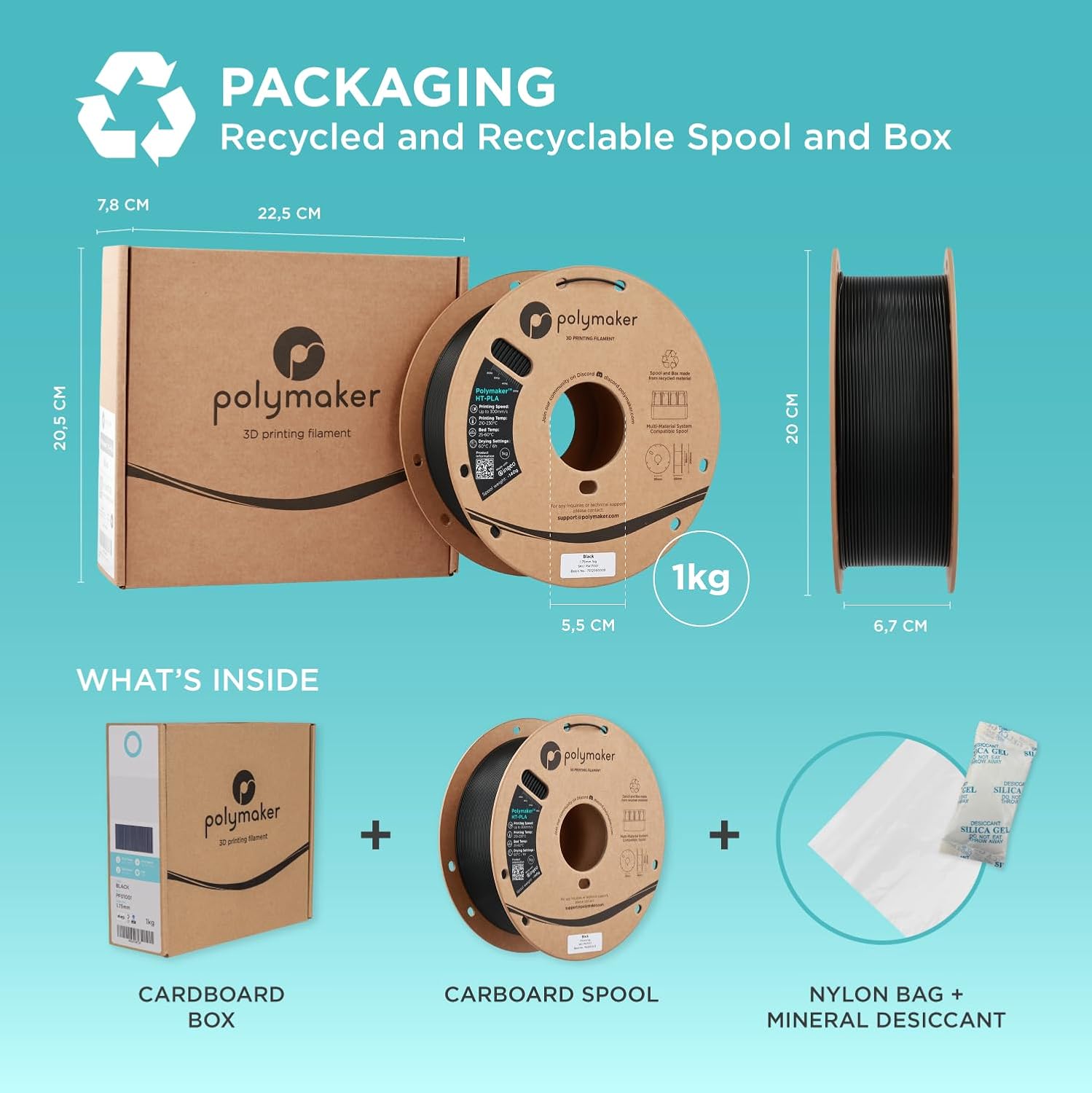
Pros & Cons of Polymaker HT-PLA 1.75mm Black
| Pros | Cons |
|---|---|
| Easy to Print: This filament offers similar ease of use as regular PLA, making it accessible for both beginners and experienced users. | Mixed Heat Resistance: While marketed as heat stable up to 150°C, some users report heat deformation at lower temperatures, which may lead to inconsistencies in performance. |
| Matte Finish: The aesthetic appeal of a matte finish is well-received, providing a smooth yet elegant look for printed parts. | Brittleness Issues: Users have experienced varying degrees of brittleness, leading to some parts breaking easily, which can be a drawback for functional prints. |
| Good Layer Adhesion: Many have found the layer adhesion to be solid, allowing for reliable prints without the need for additional tuning. | random Print Failures: Despite good adhesion, some users have encountered problems with layer separation or poor adhesion in certain conditions. |
| Low Odor During Printing: This filament emits minimal odor compared to other materials, making it a suitable choice for indoor printing. | Shipping and Reel Quality: Several users reported issues with damaged cardboard spools, which can complicate usage with various printing systems. |
| Versatile Applications: It is suitable for a range of applications, from aesthetic prints to functional parts, thanks to its enhanced heat resistance compared to standard PLA. | Inconsistent Performance: Some users have found the filament’s performance varies significantly, which could hinder reliability for critical projects. |
the Polymaker HT-PLA 1.75mm Black filament presents an appealing option for various printing needs.Though, while it offers notable benefits like ease of printing and aesthetic appeal, we need to be cautious of its inconsistencies in heat resistance and brittleness.
Q&A

Q&A Section for “”
Q1: what is Polymaker HT-PLA filament, and how does it differ from regular PLA?
A1: Polymaker HT-PLA is a high-temperature PLA specifically designed for 3D printing, with the capability to withstand temperatures of up to 150°C. unlike standard PLA, which can warp or lose shape under moderate heat, HT-PLA aims to retain its structural integrity in hotter environments. It provides a similar ease of printing as regular PLA, making it a more versatile option for functional prints.
Q2: Is this filament easy to print with?
A2: Yes, we have found that Polymaker HT-PLA is quite user-friendly and prints with the same ease as standard PLA. It can print at high speeds, up to 300 mm/s, with minimal clogging and excellent bed adhesion. Many users report that they experience little to no tuning or retries, making it great for both novices and seasoned 3D printing enthusiasts.
Q3: What kind of surface finish can I expect from prints made with this filament?
A3: One of the standout features of HT-PLA is its premium surface finish. Prints typically come out with a clean satin look right off the bed, which makes it an excellent choice for design models and display pieces. With its matte quality, it offers a smooth appearance that many users appreciate.
Q4: Are there any concerns regarding the heat resistance of HT-PLA?
A4: The heat resistance of Polymaker HT-PLA has received mixed reviews. While some users have reported great performance and good heat tolerance, others have experienced prints warping in high-heat conditions. We recommend conducting your own tests, especially for parts that will be exposed to temperatures above 60°C, to see how it holds up in your specific application.
Q5: How does HT-PLA handle layer adhesion compared to regular PLA?
A5: The layer adhesion of HT-PLA seems to vary among users. Some report good adhesion and stability, while others have encountered issues with brittleness and poor vertical strength. We suggest experimenting with print settings to find the right configuration for your printer to achieve optimal layer adhesion.
Q6: Can I use HT-PLA for outdoor applications?
A6: Yes, HT-PLA is suitable for outdoor applications due to its heat-stable properties. However, we still recommend monitoring prints that will face direct exposure to extreme temperatures, as individual experiences can differ.
Q7: what printers are compatible with the Polymaker HT-PLA filament?
A7: Polymaker HT-PLA is designed to work with most FDM printers, including popular models from brands like Creality, Prusa, and Bambu. Unless specified otherwise, you should generally be able to use this filament with standard PLA settings, making it more accessible for a wide range of printers.
Q8: What are users saying about the filament’s brittleness?
A8: Opinions on brittleness are mixed. Some users have found HT-PLA to be forgiving and strong enough for their needs, while others have faced challenges with it being brittle and breakable during the printing process.It may be helpful to adjust your printer settings or consider post-processing methods if you’re experiencing brittleness.
Q9: Is there a notable difference in the price compared to regular PLA?
A9: Typically, HT-PLA is priced slightly higher than standard PLA due to its enhanced performance capabilities. However,when considering the filament’s temperature resistance and versatility,many users find its price to be justified.
Hopefully, this Q&A section assists you in deciding whether Polymaker HT-PLA filament is the right choice for your 3D printing projects! If you have further questions, feel free to ask.
Experience Innovation

as we wrap up our review of the Polymaker HT-PLA Filament 1.75mm in Black,it’s clear that this filament truly aims to bridge the gap between convenience and functionality in the world of 3D printing. With its impressive matte finish and ability to print with ease akin to regular PLA, it’s a commendable option for both beginners and seasoned makers alike. We appreciate the rich feedback from users highlighting its print quality and aesthetic appeal, though it’s significant to keep in mind the mixed experiences regarding heat resistance and brittleness.Ultimately, the Polymaker HT-PLA filaments can serve various needs, especially those involving prints exposed to moderate heat. Though some users have noted challenges, it offers a unique value with its high-temperature capabilities at a competitive price point. Whether you’re looking to create stunning prototypes, functional parts, or beautiful decorative items, this filament is worth considering.As always, we encourage you to weigh the experiences of fellow users along with your specific project needs. If you’re ready to elevate your 3D printing game with the Polymaker HT-PLA Filament, you can find it right here: Polymaker HT-PLA Filament 1.75mm Black. Happy printing!
